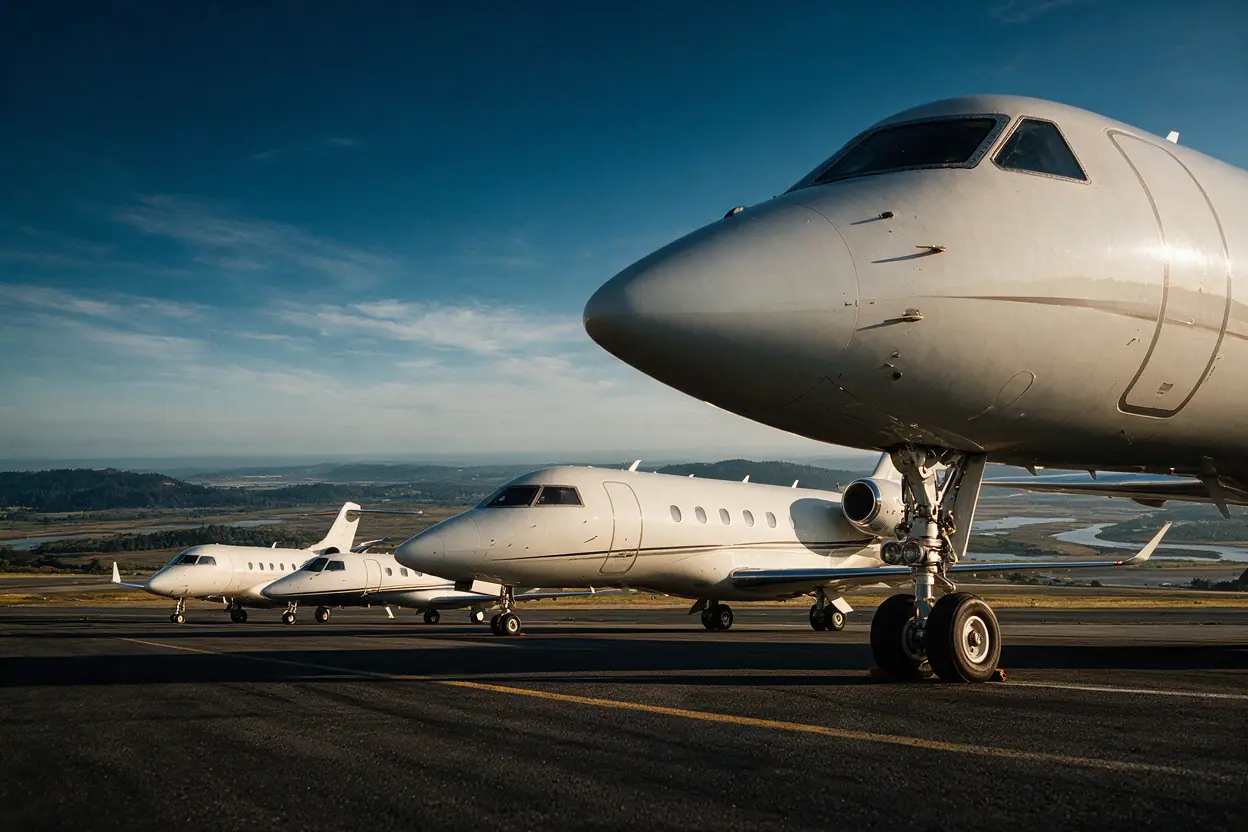
Private jet charter company fleets
Private jet charter company fleets vary by class and range. Hourly rates run from $2,200 for turboprops to $14,500 for heavy jets. The right fleet depends on distance, airport, and passenger count.
- Main page
- Planes
Private jet charter company fleets are not one product. A charter broker draws on operators with different aircraft. The table below sets out hourly rates and typical ranges by class, using estimates that hold until an operator confirms a specific tail number for your dates.
This page lists the classes and aircraft that appear most often in charter quotes: turboprops, light jets, midsize jets, super-midsize jets, and heavy jets. It also names the airports where those jets base, including Teterboro, Van Nuys, Miami-Opa Locka, and Dallas Love Field. For each, the useful question is whether the aircraft can make your route nonstop and still carry the bags.
Comparing charter company fleets
Private jet charter company fleets differ most in what they can fly nonstop from your airport, so start with the route distance and the runway. A light jet with a 1,400-nautical-mile range cannot fly New York to Los Angeles, 2,129 nautical miles, without a fuel stop, so the quote should name the stop or move you to a super-midsize jet. When a broker sends options from several charter companies, compare the aircraft type, the operator's certificate, and the total price rather than the hourly rate alone.
Airport choice changes the aircraft list. At Centennial Airport near Denver, elevation is 5,885 feet and peak density altitude reaches 9,800 feet, which reduces performance for every class and can rule out a light jet on a hot day. At Teterboro, the longest runway is 6,997 feet and July density altitude is 1,700 feet; that is enough for most midsize and super-midsize jets. If your trip begins or ends at a holiday destination such as Aspen or Jackson Hole, then ask for the aircraft that operators actually base there in season, because repositioning adds cost. Prices in the table are estimates and remain so until an operator confirms a tail number.
Share of this fleet operating in the US
FAA records show 18,165 business jets and 13,001 turboprops with current US registrations; fractional ownership accounts for 905 jets, and the typical jet rolled out in 2008.
| Jet type | Grouped by | US total | Largest base state |
|---|---|---|---|
| Daher TBM 960 | TBM 700-960 series | 987 | Delaware (117) |
| Beechcraft King Air 350i | King Air 350 series | 748 | Texas (82) |
| Pilatus PC-24 | Pilatus PC-24 | 200 | New Hampshire (22) |
| HondaJet Elite II | HondaJet series | 236 | North Carolina (38) |
| Cessna Citation Latitude | Citation Latitude | 392 | Utah (12) |
| Hawker 800XP | Hawker 800 series | 353 | Delaware (81) |
| Bombardier Challenger 350 | Challenger 300/350 series | 868 | Utah (120) |
| Gulfstream G280 | Gulfstream G280 | 289 | Utah (47) |
| Gulfstream G450 | Gulfstream IV/G450 series | 610 | California (86) |
| Bombardier Challenger 650 | Challenger 600-650 series | 562 | Utah (63) |
Origin: FAA aircraft registry, current registrations alone, as of Nov 2, 2026. Aircraft types are grouped by type-certificate family.
Business jet counts by state leaders
| State | On register |
|---|---|
| Texas | 1,671 |
| Utah | 1,578 |
| Florida | 1,569 |
| Delaware | 1,556 |
| California | 1,044 |
| Ohio | 675 |
| Tennessee | 649 |
| North Carolina | 479 |
| New York | 460 |
| Kansas | 399 |
Turboprop
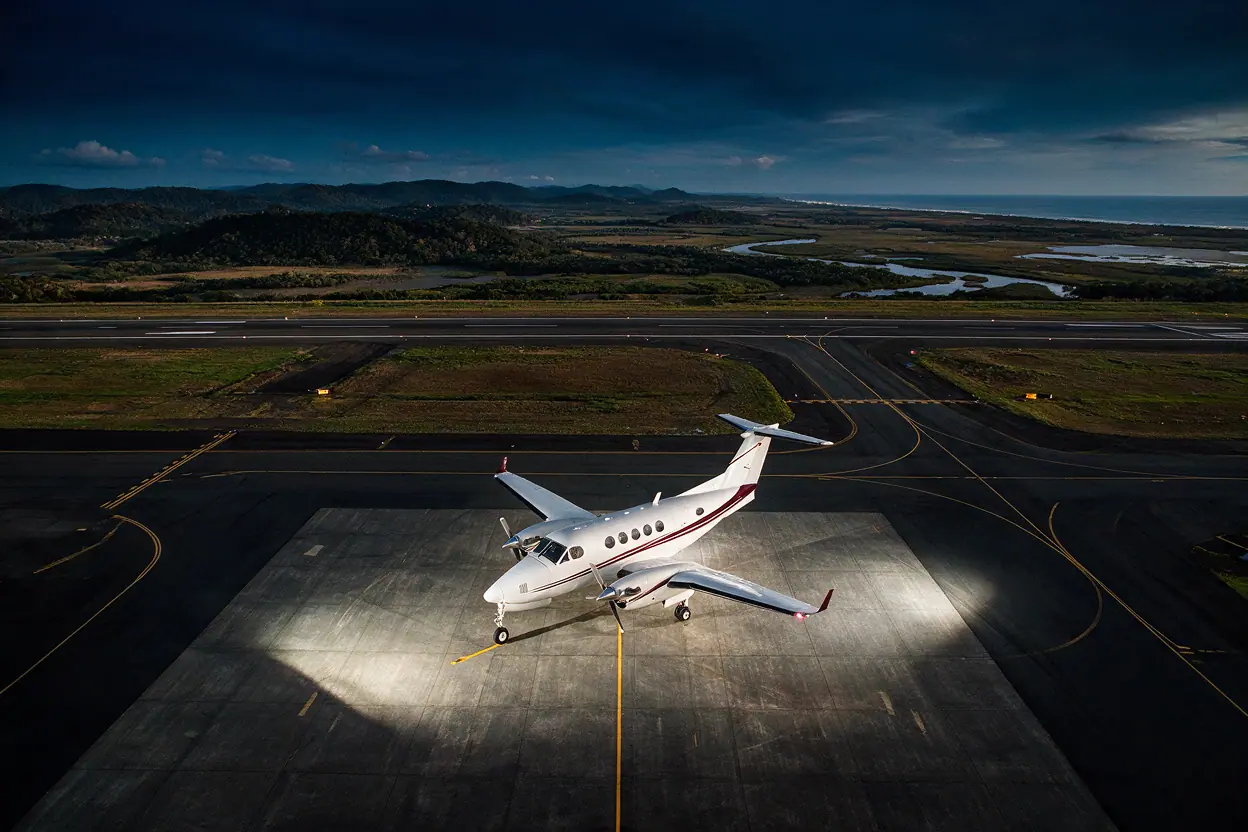
The turboprop class covers 6 to 8 passengers at $2,200 to $3,500 per hour, with a typical range of 1,500 nautical miles. The turboprop is the value option for short hops such as New York to the Hamptons, at 82 nautical miles, and it can use smaller airports than a jet. Expect slower cruise speeds around 300 knots, so longer legs take more time.
Daher TBM 960
- 6 pax
- 330 kt cruise
- 1,730 nm legs
The Daher TBM 960 is a single-engine turboprop that seats 6 at 330 knots, with a range of 1,730 nautical miles. It is efficient on short and medium hops and can use airports with modest runways. Baggage space is 32 cubic feet, so plan for soft bags on a full load.
Beechcraft King Air 350i
- 8 pax
- 312 kt cruise
- 1,800 nm legs
The Beechcraft King Air 350i seats 8 at 312 knots with a range of 1,800 nautical miles. Its 55 cubic feet of baggage and a cabin 4 feet 9 inches tall make it a workhorse for regional charter. It is slower than a jet but often available at smaller airports.
Light jet
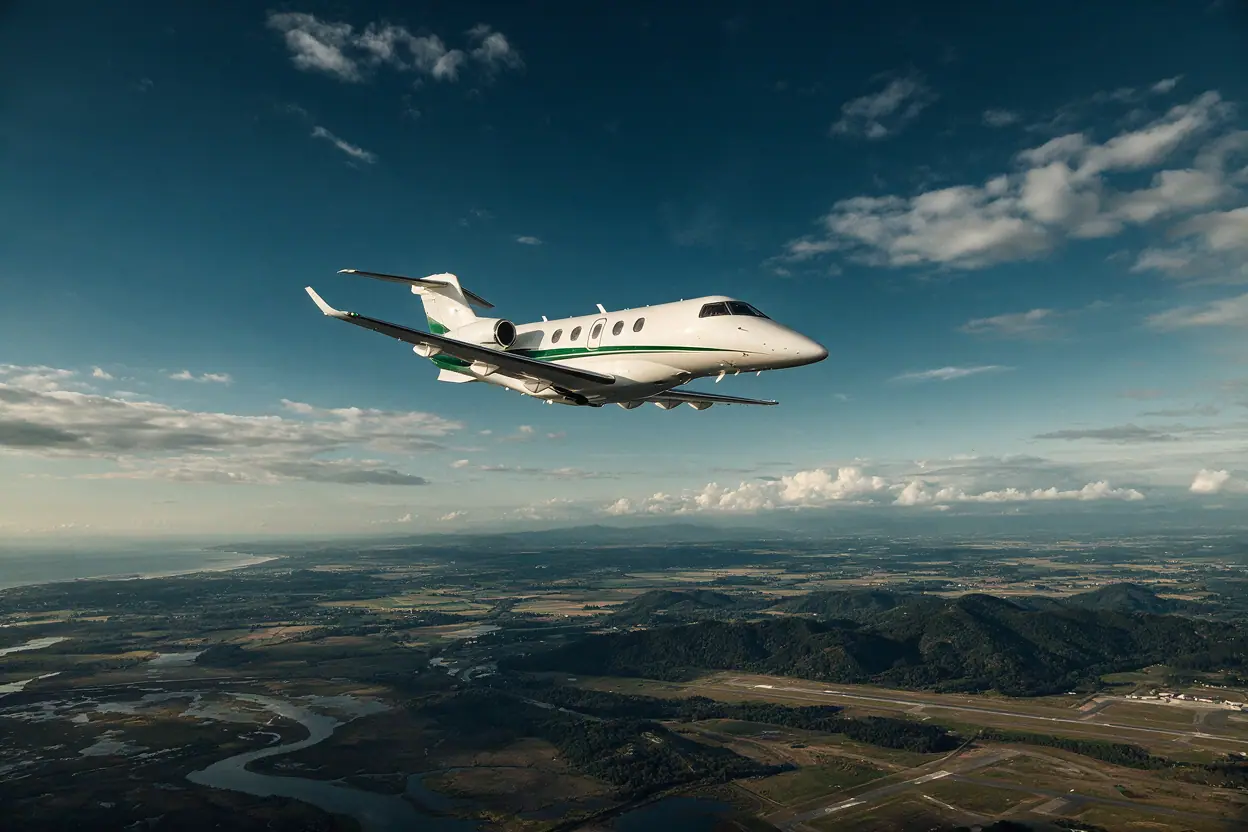
A light jet carries 4 to 7 passengers at $3,800 to $5,800 per hour and typically flies 1,400 nautical miles. That range covers New York to Miami, 949 nautical miles, in 2 hours 37 minutes. Light jets are the most common entry point for private charter, but baggage space varies widely, so check the specific aircraft.
Pilatus PC-24
- 8 pax
- 440 kt cruise
- 2,000 nm legs
The Pilatus PC-24 is a light jet seating 8 at 440 knots, with a range of 2,000 nautical miles. It has a cabin 5 feet 1 inch tall and 90 cubic feet of baggage, generous for its class. The PC-24 can use shorter runways than many light jets, which widens the airport list.
HondaJet Elite II
- 5 pax
- 422 kt cruise
- 1,550 nm legs
The HondaJet Elite II seats 5 at 422 knots with a range of 1,550 nautical miles. Cabin height is 4 feet 10 inches, and baggage capacity is 66 cubic feet. It suits short trips with light luggage, such as Los Angeles to Las Vegas at 199 nautical miles.
Midsize jet
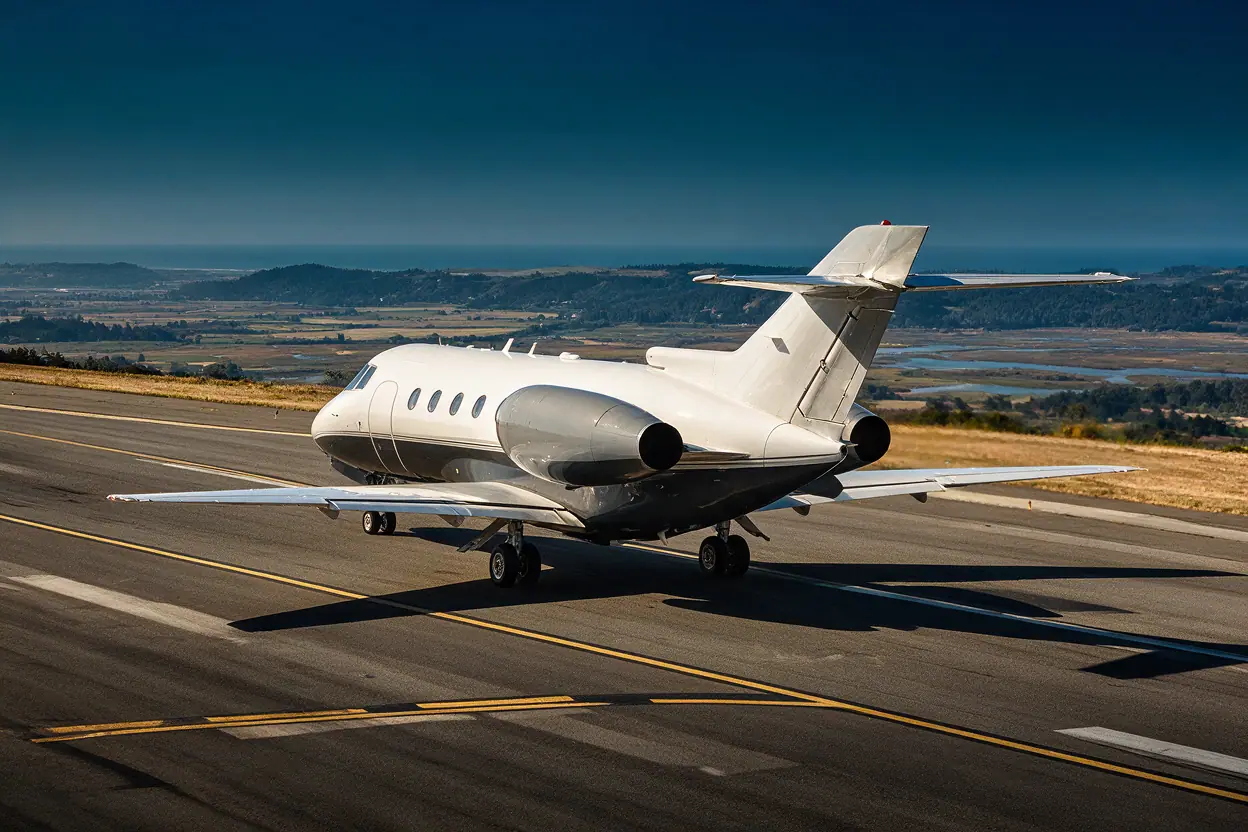
Midsize jets seat 7 to 9 passengers at $5,200 to $7,800 per hour, with a typical range of 2,100 nautical miles. Stand-up cabins and more baggage room make them a practical choice for coast-to-coast trips, though New York to Los Angeles at 2,129 nautical miles sits at the edge of this class and may need a fuel stop in some aircraft.
Cessna Citation Latitude
- 9 pax
- 446 kt cruise
- 2,700 nm legs
The Cessna Citation Latitude is a midsize jet seating 9 at 446 knots, with a range of 2,700 nautical miles. The cabin is 6 feet tall and 21 feet 9 inches long, with 127 cubic feet of baggage. That combination handles New York to Miami nonstop and leaves room for golf clubs.
Hawker 800XP
- 8 pax
- 447 kt cruise
- 2,540 nm legs
The Hawker 800XP seats 8 at 447 knots with a range of 2,540 nautical miles. Its cabin is 5 feet 9 inches tall and 21 feet 4 inches long, with 50 cubic feet of baggage. The 800XP is a common midsize option on routes like Dallas to Aspen, 619 nautical miles, though baggage is tighter than newer midsize jets.
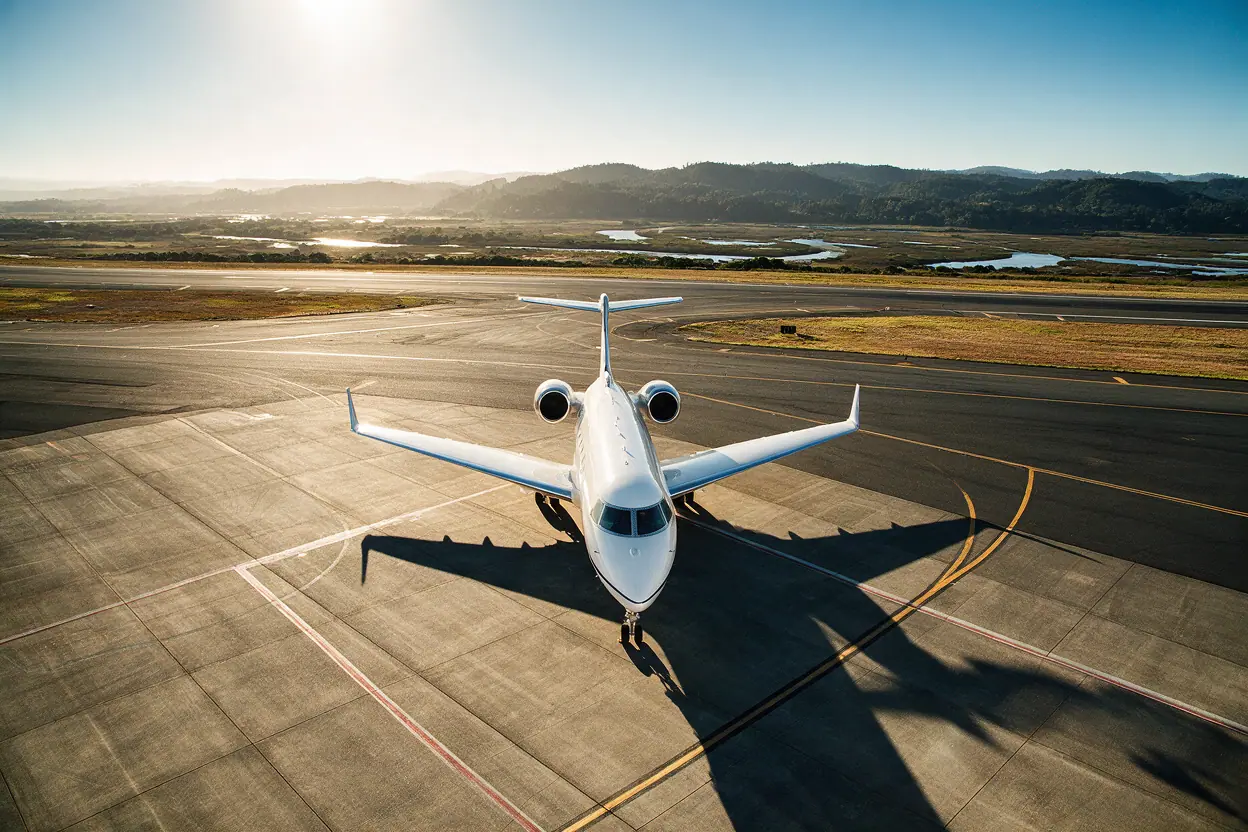
Super-midsize jet
Super-midsize jets carry 8 to 10 passengers at $7,200 to $10,000 per hour and typically fly 3,200 nautical miles. That range handles transcontinental routes nonstop, including New York to Los Angeles, and still leaves payload for bags. Cruise speeds around 470 knots shorten the longer legs.
Bombardier Challenger 350
- 10 pax
- 470 kt cruise
- 3,200 nm legs
The Bombardier Challenger 350 is a super-midsize jet seating 10 at 470 knots, with a range of 3,200 nautical miles. The cabin is 6 feet tall and 25 feet 2 inches long, with 106 cubic feet of baggage. It flies New York to Los Angeles nonstop and is a frequent choice for transcontinental charter.
Gulfstream G280
- 9 pax
- 482 kt cruise
- 3,600 nm legs
The Gulfstream G280 seats 9 at 482 knots, with a range of 3,600 nautical miles. Cabin height is 6 feet 3 inches, and baggage capacity is 154 cubic feet. The extra range over other super-midsize jets opens routes such as Los Angeles to Jackson Hole, 670 nautical miles, with margin for weather and winds.
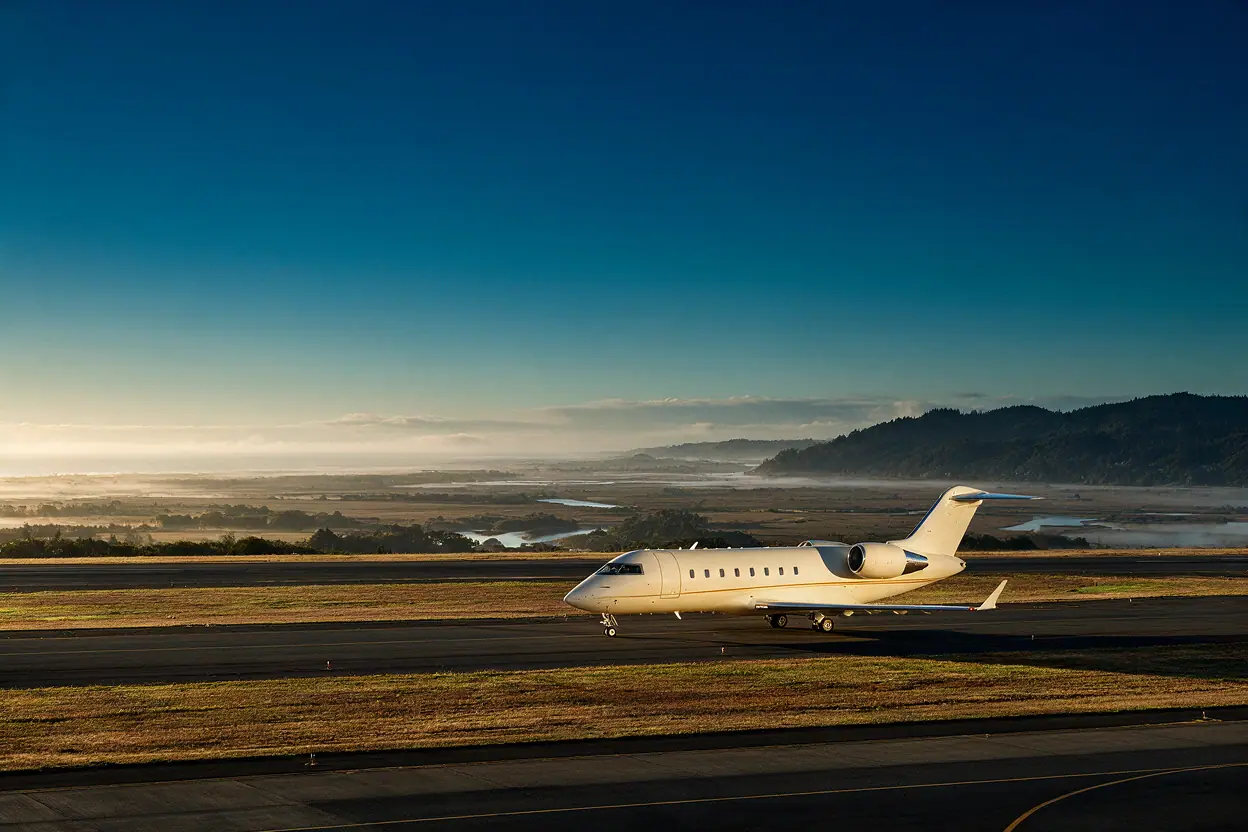
Heavy jet
Heavy jets seat 10 to 14 passengers at $9,500 to $14,500 per hour, with a typical range of 4,000 nautical miles. They suit large groups and long coast-to-coast or international legs. The trade-off is cost and airport access: heavy jets need longer runways, which can rule out smaller fields on your route.
Gulfstream G450
- 14 pax
- 476 kt cruise
- 4,350 nm legs
The Gulfstream G450 is a heavy jet seating 14 at 476 knots, with a range of 4,350 nautical miles. Its cabin is 6 feet 2 inches tall and 45 feet 1 inch long, with 169 cubic feet of baggage. It suits large groups and long legs, but its runway requirement limits access to smaller airports.
Bombardier Challenger 650
- 12 pax
- 470 kt cruise
- 4,000 nm legs
The Bombardier Challenger 650 is a heavy jet seating 12 at 470 knots, with a range of 4,000 nautical miles. The cabin is 6 feet 2 inches tall and 28 feet 4 inches long, with 115 cubic feet of baggage. It is a strong choice for coast-to-coast flights with a full passenger load.
FAQ
How expensive is it to charter a private plane?
Charter prices are estimates until an operator confirms, and hourly rates in the table run from $2,200 to $3,500 for turboprops and from $3,800 to $5,800 for light jets. A route quote adds flight time, positioning, and fees: New York to Miami in a light jet runs $10,000 to $15,000 for 2 hours 37 minutes. Larger jets cost more per hour, so a heavy jet on the same route prices higher.
Which is the largest jet charter company?
There is no single largest charter company to name here, because charter capacity sits with many operators and brokers arrange access to their fleets. What matters when comparing private jet charter company fleets is the specific aircraft and operator on your route. Ask for the aircraft model, the operator's Part 135 certificate, and the total price, then compare like for like. A broker quote should show those details before you commit.
How do I compare quotes from private jet charter companies?
Compare total price, aircraft type, and operator for the same route and date, not hourly rate alone. A light jet quote of $4,000 to $6,000 for Los Angeles to Las Vegas, 199 nautical miles, is not comparable to a super-midsize quote on the same leg. Ask whether fuel, crew, and airport fees are included, and check the operator's certificate. Charter brokers should disclose their role under DOT Part 295; the footer explains that relationship.
What are the private jet charter company fleets by aircraft class?
The main classes are turboprops (6 to 8 passengers, 1,500 nautical miles), light jets (4 to 7 passengers, 1,400 nautical miles), midsize jets (7 to 9 passengers, 2,100 nautical miles), super-midsize jets (8 to 10 passengers, 3,200 nautical miles), and heavy jets (10 to 14 passengers, 4,000 nautical miles). Hourly rates rise with class, from $2,200 at the low end to $14,500 at the high end. Range figures are typical, so confirm the specific aircraft.
Which aircraft classes appear most in private jet charter company fleets?
Light jets and midsize jets appear most often in quotes, with hourly rates from $3,800 to $7,800 and typical ranges of 1,400 to 2,100 nautical miles. Turboprops cover short hops at $2,200 to $3,500 per hour, while super-midsize and heavy jets handle transcontinental and international legs at $7,200 to $14,500 per hour. The mix depends on the region and the season, so ask which aircraft are based near your airport.
Can a light jet fly New York to Los Angeles nonstop?
No, a light jet with a typical range of 1,400 nautical miles cannot fly New York to Los Angeles nonstop, because the route is 2,129 nautical miles. A light jet quote would require a fuel stop, which adds time and cost. For that route, a super-midsize jet with 3,200 nautical miles of range or a heavy jet with 4,000 nautical miles is the practical choice, and the quote should name the aircraft and operator.